You know I love a good pre-loved find. 😀
And I love them even more when they turn out to be worth more than I paid for them – but how do I find out that they’re worth more than I paid for them?
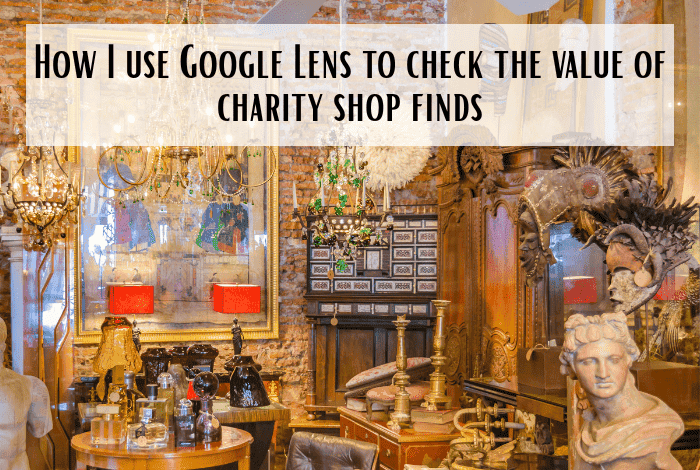
Since moving into our old Victorian house, we’ve been much more intentional about buying second-hand and vintage pieces for our home. Our old IKEA flatpacks did the job perfectly well in our last house, but they just don’t feel quite right here somehow. This house has high ceilings, old fireplaces, creaky floors and lots of character, so we’ve been trying to find pieces that feel like they belong here rather than rushing out and buying everything brand new.
That means we really enjoy spending time in vintage shops, charity shops, salvage yards and browsing Facebook Marketplace looking for things that are useful, interesting or just a little bit different. I love finding pieces with a bit of history behind them and honestly, I’d much rather spend time hunting for something unique than filling the house with lots of flatpack furniture that looks exactly the same as everyone else’s.
And when I spot something that looks like it might be a bit special, Google Lens is usually one of the first things I use.
I don’t use Google Lens because I’m planning to become a full-time reseller or because I’m secretly hoping every old lamp is worth thousands 😂 but it is really handy for getting a rough idea of whether something is fairly priced or whether I might have stumbled across a bit of a bargain.
If you’ve never used it before then it’s honestly so easy. I just take a photo of the item and then click on the little camera icon next to the microphone in the Google search bar. From there, I upload the photo and Google shows me images and listings that it thinks match what I’ve photographed.

It’s not perfect though, so you do need to use a bit of common sense. Sometimes it finds the exact item, but sometimes it finds things that are only similar. A slightly different pattern, size, age or brand can make a massive difference to the value so it’s always worth double checking properly rather than assuming Google has got it exactly right.
Once I’ve got some matches, I’ll usually have a quick look through eBay, Etsy, Vinterior or wherever the listings are from to get a rough idea of pricing for similar second-hand finds. And I do mean rough because one thing I’ve learned quite quickly is that something being listed on eBay for £100 absolutely does not mean somebody is going to pay £100 for it. 😀
Anyone can list anything online for any amount they fancy, but something is only really worth what someone else is actually willing to pay. If I’m properly curious about value then I’ll usually check sold eBay listings because that gives a much more realistic idea of what people are genuinely paying rather than what sellers are hoping for.
Even then, condition matters. Location matters. Timing matters. Sometimes vintage items sell instantly and sometimes they sit online for months and months waiting for the right buyer.
One of my favourite examples recently was our vintage whatnot that we found for £10 while we were out having a wander one afternoon. My partner spotted it and called me over and we both loved it straight away because it felt exactly like the sort of thing that suits this house, but I still checked Google Lens to see if I could find similar ones online. It was really interesting seeing what comparable pieces were being listed for and it definitely reassured me that I wasn’t overpaying when the exact same one is on eBay for £80.
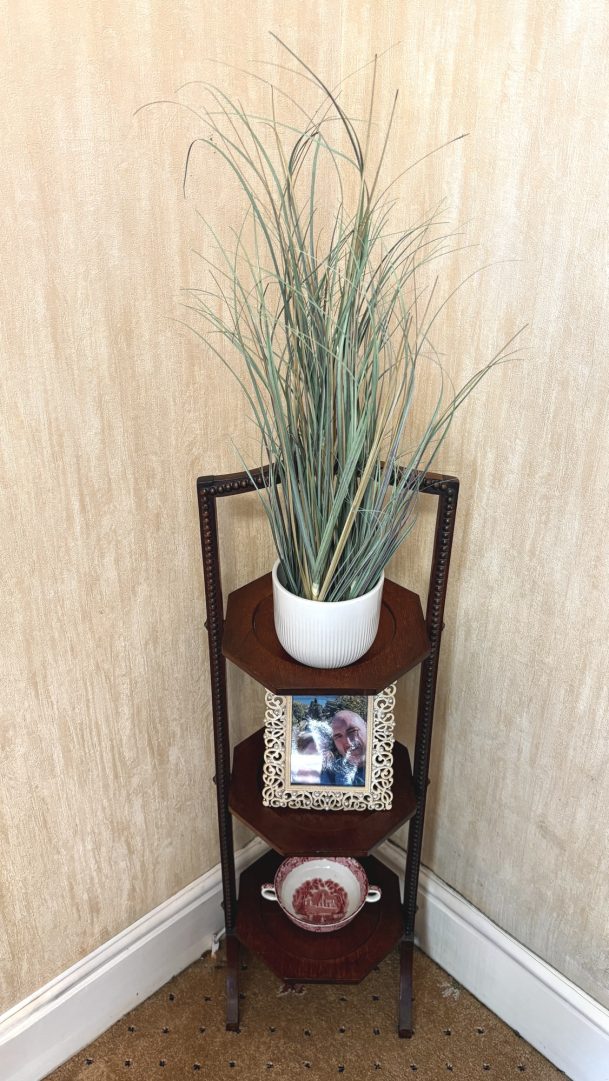
It fits perfect in a corner where we had a gap and even though it’s not something either of us would have picked up when we looked at in our old house, our tastes seem to have grown to match the house and when we spotted this – ignore the bowl on the bottom shelf though as that’s just a filler until we find something better to go there.
I had the same thing happen with a book I bought recently too. I picked it up for 50p because it caught my eye and I thought it would look cute under our little lamp. I then later checked it with Google Lens and realised similar copies were selling online for more than I’d paid for it.
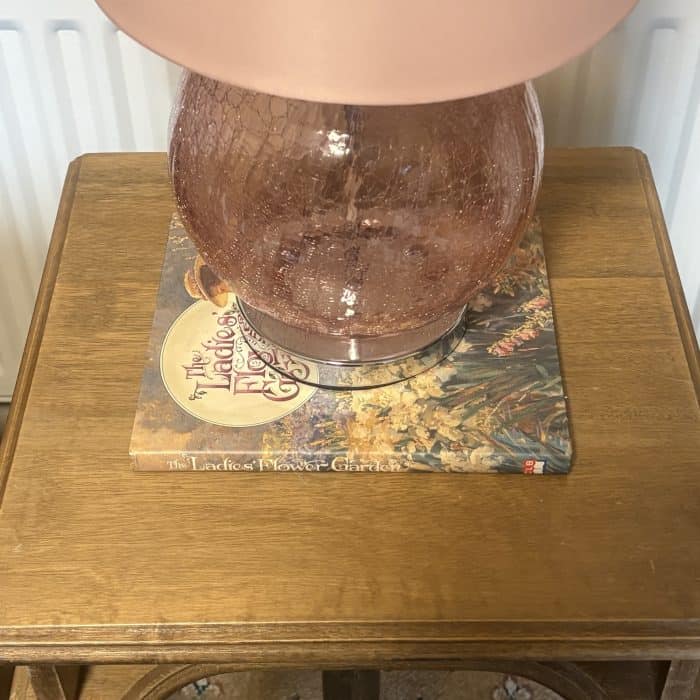
I’m obviously not retiring on the profits from one second-hand book 😂 but it’s always nice when something turns out to be a better find than you expected.
I often find that things that are slightly more expenisve that you;d think in a charity shop are priced that way as the staff have done a quick Google Lens search themselves and know they have a bargain. I spotted these sunglasses for £12 on a shelf filled with sunglasses that were priced between £1 and £4 so I suspected they were a bargain.

Turns out that they were Vintage Emanuel Ungaro sunglasses that sell for £175 so I thought they were worth buying. 😎
I’ve also used ChatGPT a few times to help identify things or give me ideas about what something might be called if I’m struggling to search for it properly. It’s actually really helpful for things like describing styles or helping narrow down whether something looks Victorian, mid-century, Art Deco or just “old-looking but probably from the early 2000s”. 😀
But I will say that ChatGPT does sometimes regularly get a bit overexcited with values. It can definitely overestimate what things are worth sometimes so I’d never rely on that alone for pricing. I see it more as a helpful starting point rather than an actual valuation tool because Google Lens and ChatGPT are both useful tools, but neither of them can predict whether someone is actually going to hand over the money for something. Something is only worth what someone will pay for it no matter what the value is quoted at.
There are lots of people who buy second-hand finds purely to resell them and I completely understand why because there definitely is money to be made if you know what you’re looking for. But personally, I’m quite cautious about buying larger items just to sell on because you never really know how long something is going to take to sell.
I don’t really want to fill the house or garage with vintage furniture while I wait six months for the perfect buyer to appear 😂 and storage is definitely part of the issue for me. Clothes are completely different because they’re easy to store. If I spot something that I think will resell well then I don’t mind taking a chance on it because it can just be folded into a bag and shoved at the back of the cupboard under the stairs until it sells.
If we buy larger pieces then it’s usually because we genuinely love them and want them in the house. If they happen to be worth more than we paid then that’s just a lovely little bonus rather than the whole reason for buying them.
Honestly, I think that’s probably the best way to approach second-hand shopping in general. Buy things you genuinely like, learn as you go and use tools like Google Lens to help you make smarter decisions. And occasionally, you get the lovely little thrill of realising your charity shop find might actually have been a bit of a bargain after all. 😀
And if nothing else, it’s definitely saved me from overpaying for quite a few “rare vintage finds” that turned out to be not quite as rare as the seller thought they were. 😂
I’d love you to follow me on Twitter and it would be amazing to see you over on my Facebook page and on Instagram. If you’re interested, you can find out more about me here and while I’ve got your attention, if you’re wondering why some of my posts lately are a little bit less frugal then have a read of this post. 😉
Do your future self a favour – Pin this post for later.

Discover more from The Diary of a Frugal Family
Subscribe to get the latest posts sent to your email.