There’s something genuinely magical about the first time a child sees a wild animal properly wild.
Not behind glass. Not in an enclosure. Just out there, living its life. Of course there’s excitement in spotting a lion or an elephant, but what really lingers are the quieter moments. Watching how animals behave when no one’s directing them. Beginning to notice how everything fits together. Realising, maybe for the first time, that humans are only one small part of a much bigger world. It’s something no textbook can quite capture.
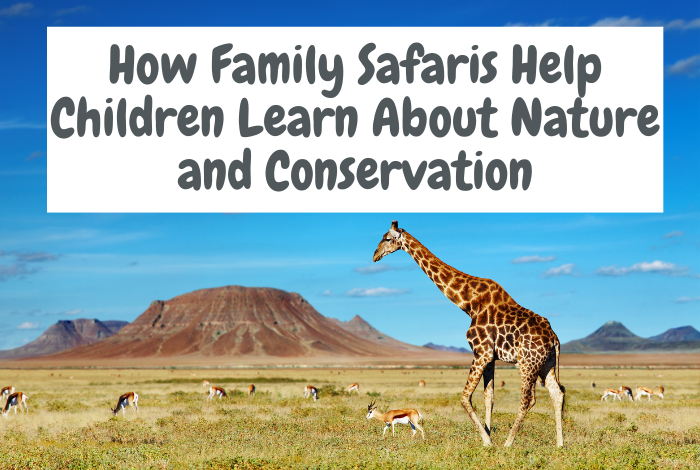
This is where Tanzania safaris really shine. From that very first morning out on the plains, children are completely absorbed. Everything feels different. The sounds. The scale of the landscape. The sheer amount of life happening all around you. Watching elephants move slowly across the savannah or spotting a cheetah crouched low in the grass is thrilling, absolutely. But it’s also the moment when children start to understand how life works when humans aren’t in charge, and where we actually fit into it all.
Safaris have a way of making children pay attention in a way that feels increasingly rare. Out here, nothing runs on a timetable. Animals appear when they choose to, or not at all. At first, that unpredictability can be frustrating. Then something shifts. Waiting becomes part of the experience. A rustle in the grass suddenly matters. A flick of a tail. A distant call. Every small detail feels important.
And it’s often those simple moments that teach the most. Children start to see how animals live, how everything depends on everything else, and how the whole system somehow holds together. They notice that even the smallest creature plays a role. Curiosity grows naturally. Awareness follows. Without anyone standing there explaining it all, children begin to understand balance.
Seeing wildlife up close also makes conservation feel real. It stops being an abstract idea and turns into something tangible. Questions come thick and fast. How do animals find food out here? What happens when their habitat changes? Why are some species so rare now? Those questions open the door to bigger conversations about human impact and why protecting these places matters.
Learning these things while actually being there makes all the difference. Children can see that animals aren’t performing. They’re not part of a show. They’re living beings with instincts and routines, just getting on with their lives. That realisation builds empathy. It creates respect. Over time, it helps children develop a sense of responsibility towards the natural world, not because they’ve been told they should care, but because they understand why it matters.
Safaris also teach patience, sometimes whether you want them to or not. Wildlife doesn’t appear on demand. Often the most memorable encounters happen when you’ve stopped searching and are simply sitting quietly, waiting. Waiting for a leopard. Waiting for elephants to reach a waterhole. That stillness teaches children to slow down, to notice what’s already there instead of always looking for the next thing.
That patience naturally turns into mindfulness. Children start tuning into sounds they’d normally miss, spotting tiny movements, noticing how the light and landscape change throughout the day. They learn to watch rather than rush. Those skills have a habit of following them home. You see it later, in how they approach things, a little calmer, a little more thoughtful, more willing to observe before reacting.
One of the most powerful lessons safaris teach is respect, and it happens quietly. Children see just how fragile these ecosystems are. They begin to understand how easily human behaviour can disrupt them. Simple safari rules reinforce this without feeling heavy-handed. Stay on the tracks. Keep voices low. Observe without interfering. Children learn that they’re guests in a world that doesn’t belong to them, and that respecting boundaries isn’t optional. Those lessons tend to stick, long after the trip ends.
Beyond the learning, there’s something special about what families experience together. Holding your breath as a lion walks past the vehicle. Laughing at a baby elephant still figuring out its trunk. Sitting in comfortable silence as the sun sets over the plains. These shared moments bring families closer. They become stories you tell again and again.
Children remember the excitement, of course. But they also remember the curiosity, the waiting, the feeling of being connected to something much bigger than themselves. These experiences become reference points. They spark ongoing interest, encourage care for the environment, and help children notice nature wherever they are.
Perhaps the most lasting impact of a family safari is the spark it lights. A child who’s watched a vast wildebeest migration or seen a leopard melt into the grass doesn’t forget it. They want to learn more. They want to understand how it all works. Often, they want to help protect it.
Because out there, ideas like ecosystems and food chains aren’t just words. They’re happening right in front of you. Endangered species aren’t statistics; they’re animals you’ve actually seen. That kind of learning stays with you.
The lessons don’t stop when you leave. They show up later in small ways. Being more patient. More present. Thinking about waste, about where things come from, about how actions ripple outwards. A safari becomes a lens through which children see the world differently.
Family safaris are about far more than adventure. They’re about education, reflection, and connection. In Tanzania, those lessons feel especially vivid thanks to the vast landscapes, the diversity of wildlife, and the simple act of watching life unfold at its own pace.
In the quiet moments between sightings, when you’re just sitting and waiting, children absorb things that shape how they understand the world.
It’s a journey that creates memories, yes, but also lessons that last long after you’ve returned home.
I’d love you follow me on Twitter and it would be amazing to see you over on my Facebook page and on Instagram. If you’re interested, you can find out more about me here and while I’ve got your attention, if you’re wondering why some of my posts lately are a little bit less frugal then have a read of this post. 😉 Collaborative Post.
Do your future self a favour – Pin this post for later.

Discover more from The Diary of a Frugal Family
Subscribe to get the latest posts sent to your email.